Have you taken a close look at your utility bill lately? If you felt a sudden pang of sticker shock, you aren't alone. We've entered an era where opening a monthly energy statement feels less like a routine chore and more like reading a horror story. In 2026, the cost of keeping the lights on and the air moving has reached levels that were unthinkable just a few years ago.
The numbers tell a sobering story. In the United States, average household electricity bills jumped by 9.6% in 2025 compared to the previous year.¹ If that doesn't sound high enough, consider that wholesale electricity prices spiked by a massive 40% in the first half of 2025.² Across the Atlantic, the situation is just as tense, with European wholesale prices rising 30% in that same period.²
This isn't just a temporary glitch in the system. It's a fundamental shift in how we power our lives. Between aging infrastructure, extreme weather, and the massive energy hunger of AI data centers, the grid is under more pressure than ever. Because of this, homeowners are moving past the "wait and see" approach. They're looking for immediate ways to stop the bleeding.
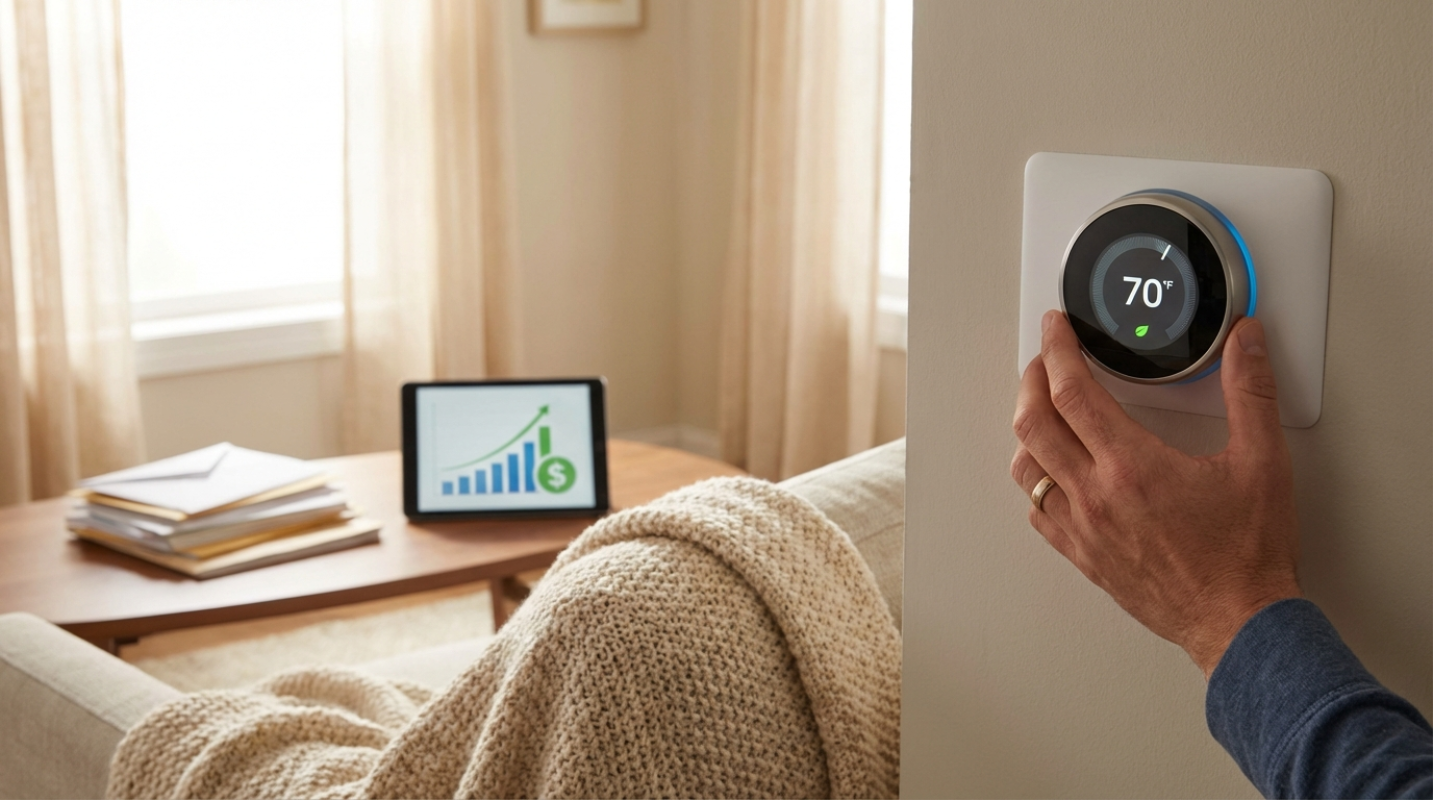
That's where the smart thermostat comes in. What used to be a flashy gadget for tech enthusiasts has quickly become a survival tool for the modern budget. People aren't buying these devices because they want a cool touchscreen on their wall. They're buying them because they're tired of paying to heat or cool an empty house.
Why Homeowners Are Turning to Tech
We've reached a tipping point where energy efficiency is no longer a "nice to have" feature. It's a financial necessity. For the first time, over 60% of people buying smart thermostats cite high bills as their main motivation, finally beating out "convenience" as the top reason.
The surge in demand is being driven by a perfect storm of factors. On one side, you have utility rates that are outpacing wage growth. On the other, you have a residential natural gas price that climbed nearly 10% in a single year. It's a cost-of-living squeeze that is forcing everyone to look at their walls and wonder if their old, manual dial thermostat is actually an expensive relic.
In tech-forward regions of the US, adoption has already hit 25% of households. Europe is following a similar path, with companies like tado° reaching their millionth connected home just last year.⁵ It's clear that the "early adopter" phase is over. We're now seeing the "early majority" take over, as practical buyers realize that doing nothing is the most expensive option they have.
What Makes a Smart Thermostat So Smart
Think of a traditional thermostat like a simple light switch. It's either on or off, and it only knows what you tell it in the moment. If you forget to turn it down before you leave for work, it will happily blast the furnace all day while you're gone. It's the digital equivalent of leaving a garden hose running in a parking lot.
Smart thermostats change the game by using learning algorithms and remote access. They don't just follow a schedule; they learn your life. If you usually head to the gym at 6:00 PM on Tuesdays, the device notices. It starts to dial back the temperature automatically, making sure you aren't wasting money on an empty living room.
Remote access is another heavy hitter for savings. Have you ever been halfway to the airport and realized you left the AC on 68 degrees? With a smart device, you just pull out your phone and fix it from the Uber. It's about having total control over your environment, no matter where you are.
Modern devices are also getting better at understanding the "thermal profile" of your home. They know how long it takes your specific house to warm up or cool down based on the weather outside. This prevents "overshooting" the temperature, which is one of the biggest hidden energy wasters in most HVAC systems.
How Fast Does the Investment Pay for Itself
It's natural to be skeptical about spending $150 to $250 on a new piece of hardware just to save money. But the math has changed significantly because of these record-high energy costs. The payback period, which used to be two or three years, has now dropped to less than 18 months for many households.
The savings are concrete and measurable. If you use a Google Nest, you're looking at an average annual saving of roughly $131 to $145. Premium models from brands like Ecobee report that users can shave up to 26% off their total heating and cooling costs. In Europe, where prices are even more volatile, the savings can reach €270 per year.
On top of the direct savings, there's a good chance you won't even have to pay full price for the device. Many utility companies offer significant rebates because they want you to use less energy during peak hours. In some parts of France, government grants have covered up to 80% of the cost, making the upgrade almost free.
- Utility Rebates: Check your local provider's website for "instant rebates" that can drop the price of a $200 unit to $50.
- Demand Response Programs: Some utilities will actually pay you an annual credit if you allow them to make tiny, unnoticeable adjustments to your temperature during grid emergencies.
- Energy Star Certification: Look for this label to make sure the device has been independently verified to save at least 8% on HVAC costs.
Making the Switch Seamless
One of the biggest hurdles for most people is the fear of messing with their home's wiring. It feels like a job for a professional, but the reality is that most modern smart thermostats are designed for a 30-minute DIY setup. The manufacturers provide step-by-step video guides that make the process relatively foolproof.
There is one technical detail to watch out for, which is the "C-wire" or common wire. This is the wire that provides continuous power to the thermostat. About 30% of buyers in older homes find they don't have one, but even this isn't a dealbreaker anymore. Most top brands now include "power extender kits" in the box that solve the problem without you having to rip open your walls.
Once the device is on the wall, it usually plugs right into your existing smart home ecosystem. Whether you use Alexa, Google Home, or Apple HomeKit, you can adjust the temperature with a voice command. "Hey Google, set the hallway to 72" is a lot easier than walking across the house in the middle of the night.