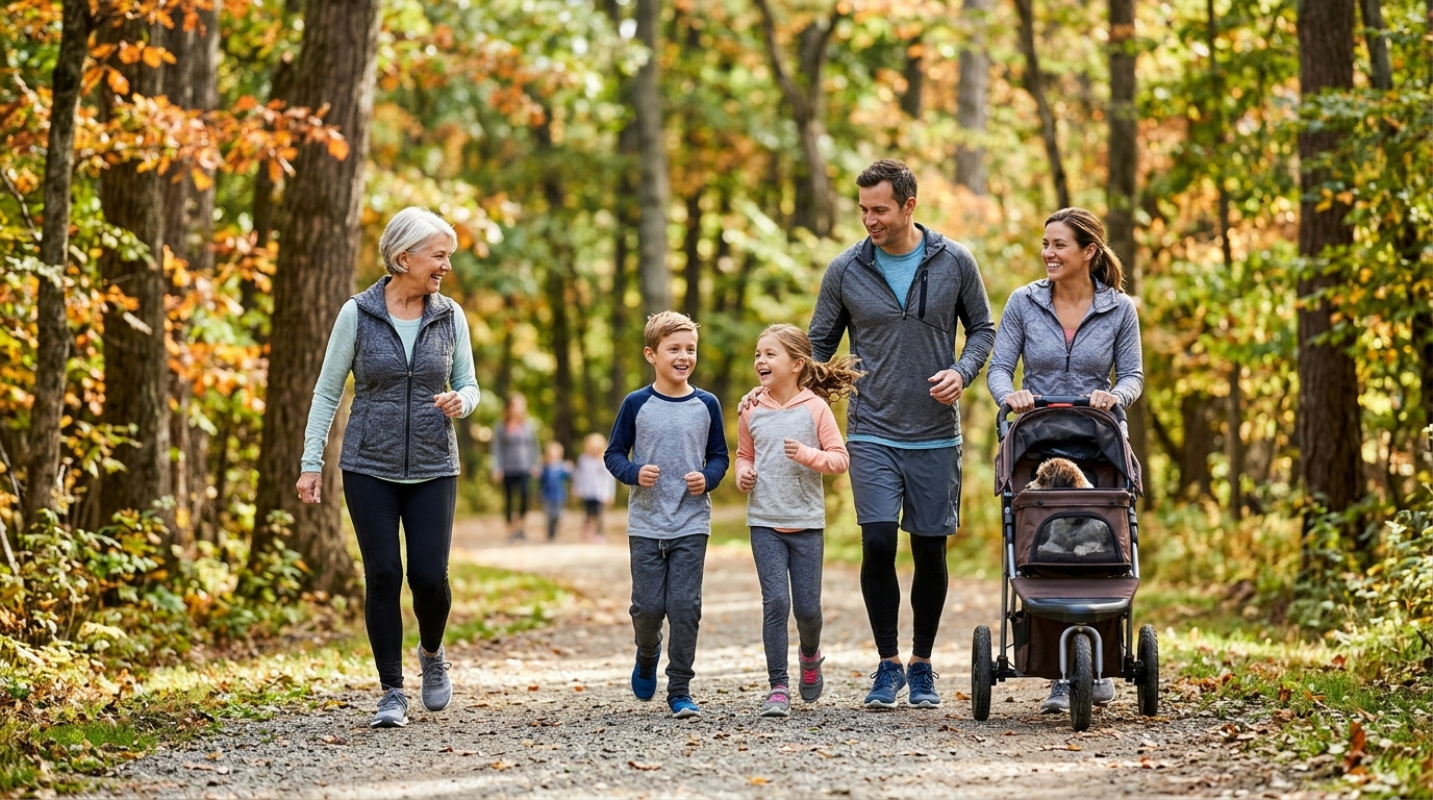
Have you looked at your screen time report lately? It is probably not pretty, and your kids' reports are likely worse. We are facing a quiet crisis in keeping our kids active. According to a major report on physical activity for children and youth, the physical activity grade for American kids is a dismal D-.¹ Only about 20% to 28% of kids aged 6 to 17 get the recommended 60 minutes of daily physical activity.¹ To make matters worse, 80% of children blow past their daily screen-time limits.¹
So what does this actually mean? It means school programs and individual efforts are not cutting it. We need family-based interventions to turn things around.³ When you make fitness a family affair, something incredible happens.
A study published in PMC found that exercising together as a family unit boosts happiness and overall well-being far more than working out alone.² It acts like a social glue that connects you while releasing those feel-good endorphins. Another study showed that when parents move with their children, the kids are much more likely to stick with sports as they grow up.⁷ You are not just babysitting, you are hardwiring their brains to love movement.
Plus, active weekends are a great way to lower parental stress. Instead of refereeing screen-time arguments, you are spending quality time together.
Planning Your Family Weekend Workout Without Friction
How do you start without sounding like a drill sergeant? Nobody wants to wake up on Saturday morning to someone blowing a whistle and demanding push-ups.
The secret is to hold a family summit. Sit down together on a Thursday or Friday night and decide what you want to do. Let the kids have a real say in the activities. When they help choose, they feel ownership and are far more likely to participate without complaining.
A clinical trial studying family physical activity found that families who build a shared physical activity identity, meaning you collectively view yourselves as an active family, stay committed much longer.⁵ It becomes part of who you are.
Keep your scheduling flexible. Set specific but forgiving goals. Instead of aiming for a rigid schedule, try to book one outdoor activity for Saturday morning. If it rains or someone wakes up cranky, just slide it to Sunday. Be realistic about what your kids can do based on their ages.
Fun Exercise Ideas for Families That Don't Feel Like Work
If you tell your kids they are going to exercise, you will probably get eye rolls. If you tell them you are going on an adventure, you win.
Here are some easy ways to get everyone moving without making it feel like a chore
• Gamified Scavenger Hunts: Create a quick list of things to find in your neighborhood or local park. You can search for a yellow leaf, a smooth stone, or a dog with a red collar. Keep the pace fast and walk or jog between spots.
• Living Room Circuits: Set up simple stations using body-weight movements. You can do planks while your kids do plank high-fives on their knees, facing you. You can do air squats while they do frog jumps.
• Local Resource Adventures: Head to local hiking trails, public pools, or tennis courts. These are inexpensive ways to change your environment and keep things interesting.
• Active Play: For younger kids, skip the structure entirely. A game of tag, balloon volleyball, or puddle jumping counts as excellent physical activity.
Overcoming Common Obstacles to Consistency
We have all been there. The alarm goes off on Saturday, the weather looks gloomy, and the kids are glued to their tablets. How do you beat the inertia?
First, have a backup plan for bad weather. Keep a few indoor movement ideas in your back pocket. You can turn on a dance video, set up an indoor obstacle course with couch cushions, or play an active video game together.
What about the classic "I don't want to go" attitude? This is where your family identity and positive reinforcement come in. A study published in Medicine & Science in Sports & Exercise showed that families who received coaching on how to participate in activities together saw a big drop in sedentary time and a jump in physical activity.⁹
Use a simple reward system to build positive associations. This does not mean buying toys or eating junk food. Let the reward be something fun, like choosing the family movie for Saturday night or getting to stay up thirty minutes later.
To get your family moving, you do not need expensive gym memberships or fancy gear. Sometimes, having a few simple tools or visiting the right local spots can make all the difference.
Making It Stick & Turning Weekend Wins into Lifestyle Habits
Consistency is the real goal here. To keep the momentum going, make your progress visual. Hang a family fitness calendar on the fridge and let the kids put a sticker on every day you complete an activity together.
Remember that your kids are watching you. If you complain about exercise, they will too. If you show enthusiasm and make movement look fun, they will adopt that same positive outlook.
Finally, change your routine with the seasons to keep things fresh. In the summer, you can focus on swimming and bike rides. In the autumn, go for leaf-crunching hikes. In the winter, try ice skating or sledding. Keep adapting and keep moving together.
To help you plan, here are some simple age-appropriate guidelines to keep in mind
• Preschoolers (Ages 3 to 5): Focus on active play throughout the day. Try animal walks, playground tag, balloon volleyball, and short walks.
• Kids and Teens (Ages 6 to 17): Aim for at least 60 minutes of moderate-to-vigorous activity daily. Great weekend ideas include family bike rides, hiking, backyard soccer, or swimming.
• Adults (Ages 18 and up): Target 150 minutes of moderate-intensity activity per week. Lead the family hike, join in on the active play, or do a joint body-weight circuit.
Sources:
1. 2024 U.S. Report Card on Physical Activity for Children and Youth
https://paamovewithus.org/wp-content/uploads/2024/10/2024-US-Report-Card-Executive-Summary_FINAL.pdf
2. PMC - Individual vs. Family Exercise Study
https://pmc.ncbi.nlm.nih.gov/articles/PMC12220237/
3. Frontiers in Sports and Active Living - Parent-Child Physical Activity Study
https://www.frontiersin.org/journals/sports-and-active-living/articles/10.3389/fspor.2024.1372664/full
4. PMC - All in the Family Program Study
https://pmc.ncbi.nlm.nih.gov/articles/PMC11699837/
5. Medicine & Science in Sports & Exercise - Family Physical Activity Intervention
https://www.ovid.com/jnls/acsm-msse/abstract/10.1249/01.mss.0001061436.99577.84~impact-of-a-family-physical-activity-intervention-on?redirectionsource=fulltextview
*This article on seisim.com is for informational and educational purposes only. Readers are encouraged to consult qualified professionals and verify details with official sources before making decisions. This content does not constitute professional advice.*


 .jpeg)