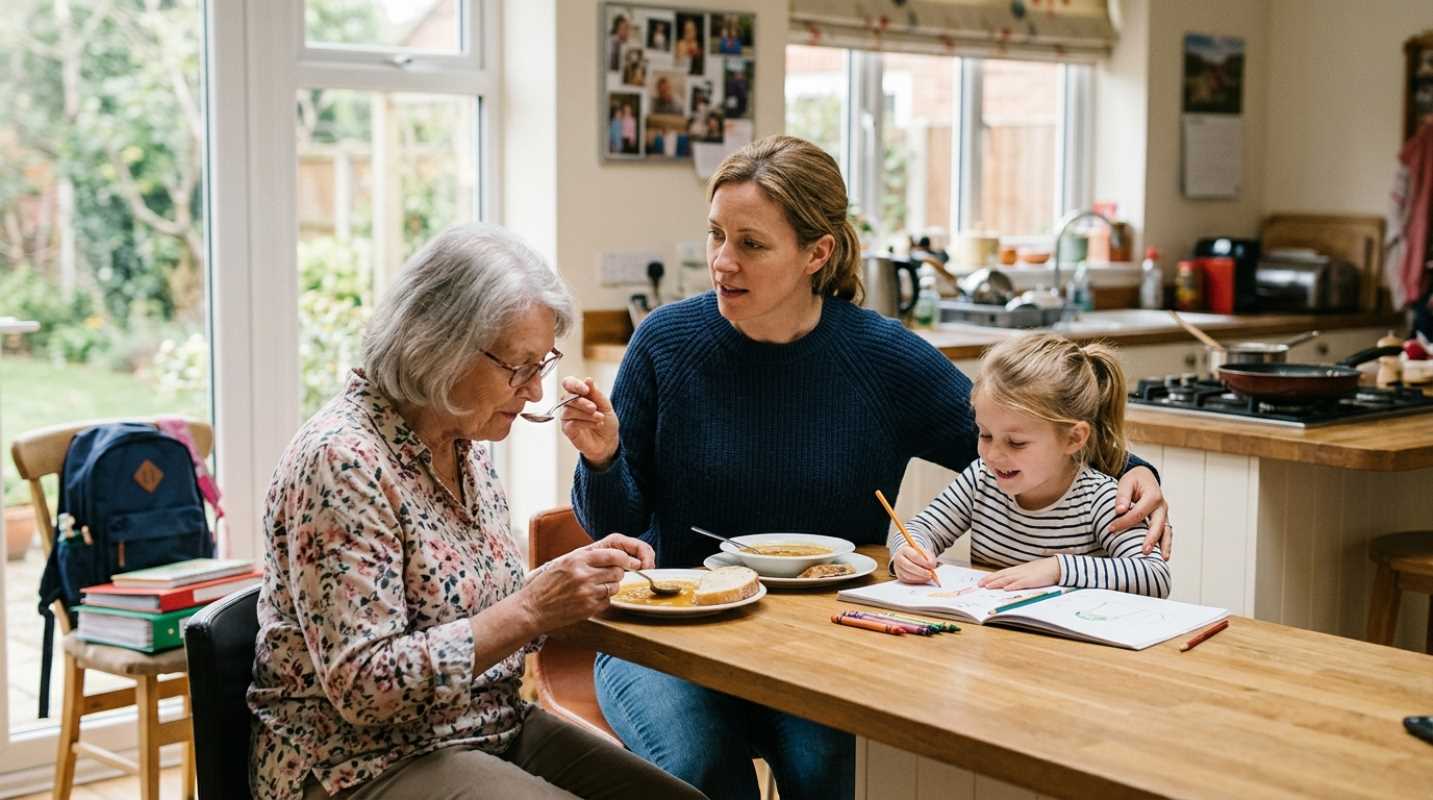
Have you ever felt like your entire life is a balancing act on a high wire stretched between two completely different generations? If you're currently helping your teenager study for an exam while simultaneously organizing prescription refills and doctor visits for your aging parents, you aren't alone. Welcome to the Sandwich Generation.
Roughly 23 percent of adults in the United States fit this description today.¹ If you are in your 40s, that number jumps to more than 50 percent.² You're squeezed tightly between two deeply meaningful, yet intensely demanding, life stages. On one side, you have growing children who need your guidance, transportation, and emotional support. On the other side, you have elderly parents navigating health challenges, mobility changes, and fixed incomes.
It can feel completely a lot of. The constant mental load, the logistical headaches, and the emotional weight of watching your parents grow frail while your kids grow up fast can leave you feeling drained. But navigating this double caregiving season doesn't have to mean running yourself into the ground.
Introduction - The Reality of the Dual Generation Squeeze
Why does this season feel so much harder than previous parenting stages? Because you're managing two opposite ends of the care spectrum at the exact same time. Children are gaining independence and reaching outward into the world, while aging parents are losing independence and drawing inward.
The logistical weight alone is staggering. Between school drop-offs, sports practices, Medicare forms, medical appointments, and your own work commitments, your calendar can quickly become a battlefield. You're constantly shifting gears from being an authoritative guide for your kids to being an advocate and caregiver for your parents.
Acknowledging the sheer weight of what you are doing is the first step. You aren't imagining it, and you aren't failing just because you feel tired. Managing dual roles is genuinely one of the most complex tasks a person can take on during their peak working years.
Mastering the Art of Balancing Caregiving Responsibilities
How do you keep everything moving without collapsing from exhaustion? You start by letting go of the myth of perfection. Balancing these roles requires flexible structure, open communication, and realistic expectations.
Here are practical approaches to manage the daily rush
• Set realistic daily expectations: Focus on two or three needed tasks each day. Everything else is bonus material. If school lunches are packed and your father took his heart medication on time, consider the day a success.
• Use a single shared calendar: Sync school schedules, doctor appointments, and family events into one central digital calendar. Color-code entries for each family member so everyone can see what is happening at a glance.
• Communicate clearly with your children: Talk to your kids in age-appropriate ways about what their grandparents are experiencing. Give children small, meaningful jobs like setting the table, helping with simple chores, or reading a book to a grandparent. This lightens your workload while teaching your kids empathy.
• Divide responsibilities with relatives: Stop trying to do it all yourself. If you live near your parents and manage local doctors' visits, ask a long-distance sibling to handle finances, pay monthly bills online, or coordinate medical insurance claims.
• Hold a weekly micro-planning check-in: Take ten minutes every Sunday evening to review the upcoming week. Spotting schedule overlaps early gives you time to arrange carpools or hire help before an emergency happens.
Prioritizing Your Well Being and Avoiding Caregiver Burnout
Caregiver burnout is a real threat for dual caregivers. Studies show that over 80 percent of adults caring for both children and parents report feeling physically and emotionally exhausted on a regular basis. You cannot give your family energy that you do not have. Taking care of yourself isn't a luxury or an afterthought. It's an absolute necessity.
Burnout rarely happens overnight. It creeps up through chronic fatigue, sudden irritability, poor sleep, and a loss of interest in things you used to enjoy. When you notice these red flags, treat them as urgent signals to slow down and rebuild your reserves.
Start integrating short rest breaks directly into your routine. Taking five minutes of quiet time in your car, going for a brief morning walk, or practicing deep breathing between meetings helps calm your nervous system. Learn to say no to extra projects at work or volunteer requests at school that strain your remaining energy. Protect your mental space as fiercely as you protect your family's health.
Needed Resources for Dual Generation Caregivers
You don't have to do everything on your own. A wide network of public programs, employer benefits, and community organizations exists specifically to support families in your situation.
Financial pressure is another major stress factor. Nearly 60 percent of dual caregivers report scaling back or completely stopping their retirement contributions to help cover family care expenses.³ Using outside help protects your financial security while making sure your loved ones get proper care.
Consider tapping into these needed support systems
• Eldercare Locator and local Area Agencies on Aging: This free public service connects caregivers to local resources, including adult day programs, home-delivered meal services, and affordable transportation for medical visits.
• Employer-provided care benefits: Many workplaces offer emergency backup care programs, flexible work options, and Employee Assistance Programs that provide free mental health counseling and care coordination advice.
• Family and Medical Leave Act options: Federal FMLA laws provide up to 12 weeks of job-protected, unpaid leave for qualified caregiving needs, giving you peace of mind during unexpected family medical crises.
• Elder law specialists: Working with a certified elder law attorney helps you organize key documents like power of attorney, healthcare proxies, and estate plans long before health emergencies occur.
• Online caregiver networks: Platforms like Trualta and online caregiver support groups connect you with practical skills training and peer advice from people who understand your daily struggles.
Growing Not Just Surviving
Caring for growing children and aging parents simultaneously is undoubtedly one of the most taxing phases of adulthood. Yet, it also brings unique opportunities for deep connection. Your children get to witness real compassion and family duty in action, while your parents receive the comfort of knowing they are safe and cared for.
Give yourself permission to ask for help early and often. Set clear boundaries around your time, make use of available community tools, and stop expecting yourself to be everywhere at once. Taking care of your own physical and mental needs is just as important as taking care of everyone else. You are the heartbeat of your household, so make sure you give yourself the exact same grace and care you offer to the people you love.
Sources:
1. Aging Together
https://aging-together.com/caring-for-aging-parents-kids-the-sandwich-generations-practical-guide/
2. Pew Research Center
https://www.pewresearch.org/short-reads/2022/04/08/more-than-half-of-americans-in-their-40s-are-sandwiched-between-an-aging-parent-and-their-own-children/
3. Athene
https://www.athene.com/smart-approaches/is-the-sandwich-generation-ready-for-retirement.html
*This article on seisim is for informational and educational purposes only. Readers are encouraged to consult qualified professionals and verify details with official sources before making decisions. This content does not constitute professional advice.*

 .jpeg)