Have you ever pulled into your driveway, clicked the garage door opener, and felt a sudden spike of stress as the door rolled up? You aren't alone. Roughly 62% of adults view the garage as the single most cluttered space in their entire home.¹
Over time, this room becomes a magnet for forgotten paint cans, half-broken lawn furniture, and mystery boxes from your last move. It turns into a giant, windowless junk drawer. But when you reframe how you view this space, everything changes. The garage isn't an overgrown dumping ground. It's high-value square footage hiding right behind your interior drywall.
Think about the numbers for a second. Around 36% of homeowners can't even park a single vehicle inside their garage because of the sheer volume of floor clutter.² When you reclaim that floor space, you aren't just tidying up. You're giving a $30,000 vehicle a warm, weather-protected home away from hail, tree sap, and rust. Beyond protecting your car, clearing out the chaos gives you space for a home gym, a woodworking shop, or a dedicated setup for a weekend side business. In fact, the global garage organization industry has surged past $16 billion as millions of homeowners realize that organizing the garage is the cheapest way to add a functional new room to their home.³
Assessing Your Needs and Decluttering Tools
Before you jump online and start ordering shiny metal cabinets, take a breath. Buying organization hardware before you purge just gives you expensive, organized clutter. Always declutter first, measure second, and shop third.
The standard approach starts with a full driveway purge. Pick a clear weekend, open the garage door, and pull everything out onto the pavement. Sort your belongings into four distinct piles: keep, donate, sell, and trash.
Although sorting, throw away every cardboard box you find. Cardboard absorbs moisture from the air, breaks down quickly, and acts like a five-star hotel for rodents and insects. Replace those crumbling boxes with clear, heavy-duty plastic totes featuring secure lids. Clear totes let you see exactly what is inside without opening them, saving you from digging through stacked bins later.
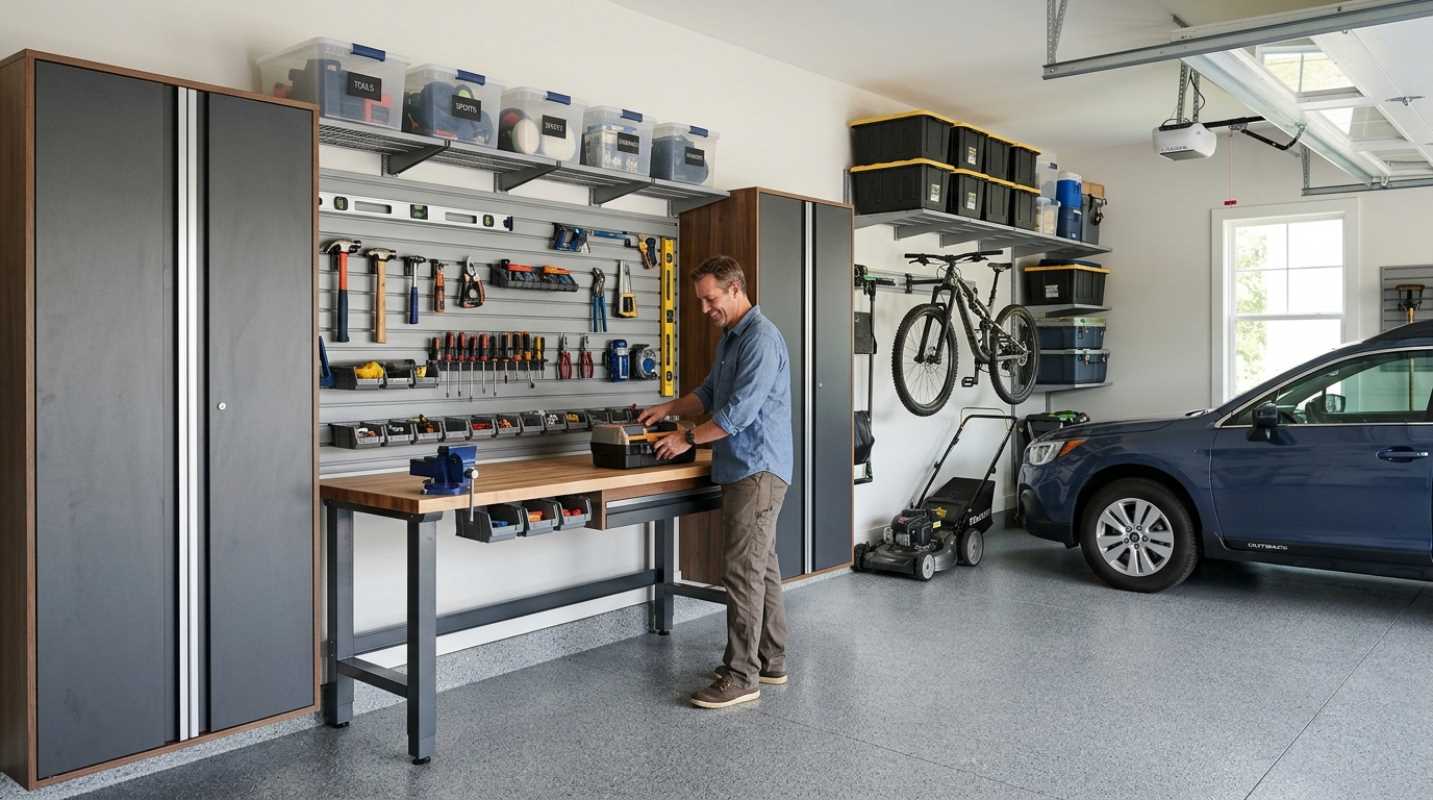
As you decide where kept items will live, adopt a strict vertical mindset. Your goal should be keeping 80% of your gear completely off the concrete floor. To do this without creating a chaotic mess, map your space into clear functional zones
• Zone 1 (Transition Zone): Located right next to the interior door. Use this space for shoes, jackets, dog leashes, and backpacks so daily items never hit the garage floor.
• Zone 2 (Frequently Used): Positioned at eye level along primary walkways. Great for gardening tools, lawn care supplies, and active sports equipment.
• Zone 3 (Bulky and Seasonal): Overhead areas and high shelves reserved for holiday decorations, camping equipment, and winter tires.
• Zone 4 (Workshop and Tools): A dedicated station for workbenches, hand tools, power equipment, and hardware drawers.
• Zone 5 (Hazardous Storage): Lockable upper cabinets kept far out of reach of children and pets for storing fertilizers, chemicals, paint, and propane tanks.
Investing in Wall-Mounted Organization Systems
Once your floor is empty, your walls become your main storage engine. Wall-mounted systems let you pack maximum storage density into minimal square footage without choking off your walking paths. But which wall system fits your needs best?
• PVC Slatwall Systems: Heavy-duty PVC panels cover wide wall sections, providing a clean, seamless look while hiding studs. Hooks, baskets, and shelf brackets snap directly into the horizontal grooves. You can shift, raise, or slide accessories around in seconds without pulling out a drill.
• Metal Pegboards: Traditional fiberboard pegboards sag and disintegrate when exposed to garage humidity. Modern metal pegboards, usually built from heavy galvanized steel, hold up to ten times more weight and work with magnetic tool strips for bench organization.
• Track and Rail Systems: If you want a fast, budget-friendly installation, horizontal steel tracks are hard to beat. They mount directly into wall studs and rely on versatile hanging hooks designed for string trimmers, ladders, and long-handled shovels.
When selecting a wall system, pay close attention to weight ratings per linear foot. Always choose modular setups that adapt over time. A wall rig holding baby strollers today should easily convert to support mountain bikes or golf bags a few years down the road.
Advanced Garage Storage Solutions for Every Lifestyle
What about those massive, awkward items that refuse to fit on a wall panel? That is where heavy-duty overhead solutions and specialized cabinetry step in.
Ceiling space is often completely neglected, yet it offers dozens of cubic feet of open storage capacity. Heavy-gauge wire ceiling racks mounted directly into your wooden ceiling joists can easily hold 600 to 800 pounds of low-frequency storage bins. If you hate climbing extension ladders to grab holiday lights, motorized ceiling lifts lower platform racks, or bicycles directly to waist height with the push of a button or a tap on a smartphone app.
When choosing between cabinets and open shelving, consider your visual tolerance. Open industrial wire shelves provide rapid access to gear, but high-quality steel cabinetry hides visual chaos, locks away toxic products, and gives the room a sleek showroom feel.
For those who love working on dynamic projects, mobile tool chests with heavy-duty casters offer incredible flexibility. Roll your tools right up to the car bumper while working on brakes, then slide the unit neatly under your workbench when you wrap up for the day.
Maintaining Your New Garage Ecosystem
Installing a great storage system is only half the battle. Keeping your newly organized garage functional requires a simple maintenance routine.
First, guard your transition zone fiercely. The landing zone right next to your house entry door is the first place clutter tries to re-establish a foothold. If shoes, sports bags, and rain jackets start piling up there, the mess will slowly creep back across the rest of the garage floor.
Second, schedule brief seasonal audits twice a year, ideally during spring and fall cleanups. When you swap out lawn mowers for snow shovels or camping gear for holiday bins, take ten minutes to toss broken gear, sweep off wall tracks, and wipe down shelf tops.
Remember, a great organization system is never rigid. It's a flexible setup designed to evolve as your family grows, your hobbies change, and your storage needs shift. By keeping your floor clear, thinking vertically, and giving every single tool a clear home, you turn a stressful dumping ground into one of the most productive spaces in your house.
Sources:
1. Garage Living Stats
https://www.garageliving.com/blog/home-garage-stats
2. CRAFTSMAN Garage Usage Survey
https://www.multivu.com/players/English/9238153-createsman-garage-usage-survey/
3. Garage Organization & Storage Market Report
https://www.marketresearchfuture.com/reports/garage-organization-storage-market-26398