Have you ever noticed how autumn has a way of sneaking up on you? One day you're sitting on the patio sipping iced tea, and the next, you're scraping frost off your windshield. Before the deep freeze sets in, your house needs a little attention. Think of fall maintenance like giving your home a good warm jacket before sending it out into a blizzard.
Taking care of your house in the fall is pure asset protection. If you spend $100 to $300 on basic DIY supplies, or maybe $200 to $800 for professional services, you can save thousands down the road.¹ Skipping this work is a risky gamble. Spend $120 to $300 to clean your gutters now, or risk facing an $8,000 insurance claim for interior water damage from ice dams later. It's a simple choice.
Getting into the right mindset makes all the difference. You don't have to finish every single chore in a single Saturday. Break these projects down weekend by weekend throughout autumn. By taking care of small vulnerabilities today, you avoid freezing nights waiting for an emergency repair technician who is already booked solid.
Exterior Defense - Preparing Gutters and HVAC for Winter
Your home exterior takes the brunt of winter storms. Protecting your roofline and your heating equipment should sit at the top of your priority list.
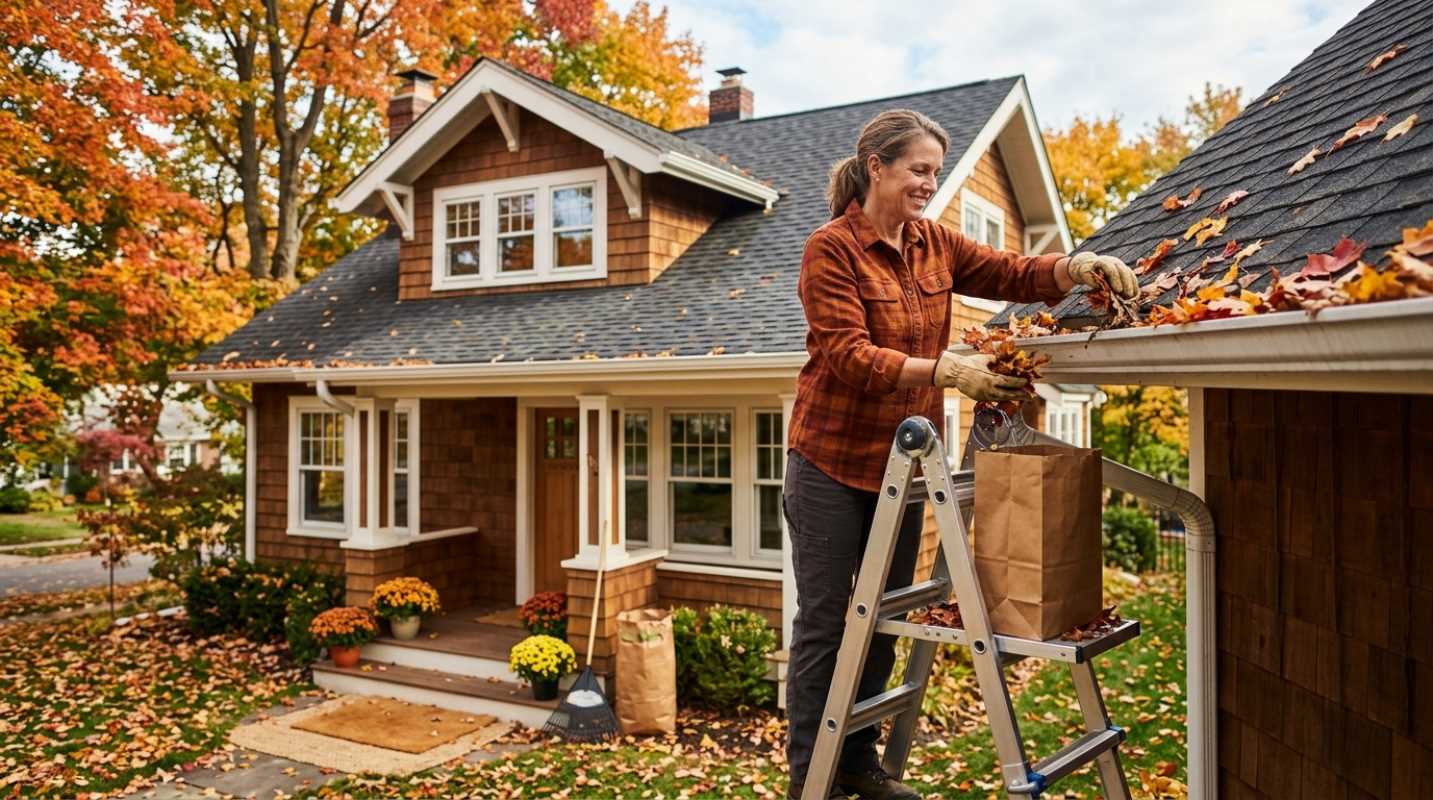
Clearing out your drainage system is step one. When leaves and dirt clog your gutters, trapped water has nowhere to go. Once temperatures drop, that water freezes and expands, tearing gutters away from your house and backing up under your shingles.
• Clean and flush gutters: Wait until late autumn after most leaves fall. Pull out dry debris by hand, then flush the downspouts with a hose to clear hidden blockages.
• Extend downspouts: Direct downspout extensions at least 5 feet away from your foundation. Water pooling right next to your home expands by 9% when it freezes. That pressure causes micro-cracks in concrete that cost anywhere from $7,500 to $30,000 to repair.
• Install mesh guards: Adding simple gutter covers keeps heavy leaves out and speeds up future cleanouts.
Your heating system needs equal care. A routine HVAC inspection costs between $70 and $200, but an emergency furnace fix in January can easily cost $400 to $2,500. Full system replacements run $3,500 to $7,500 or more. Schedule a tune-up early so a technician can check gas lines, heat exchangers, and safety controls.
Don't forget air leaks. Drafty windows and doors waste money every single minute your heat runs. Sealing air leaks with caulk and weatherstripping, combined with adding attic insulation, cuts your heating and cooling costs by about 15%.² Inefficient windows alone account for 25% to 30% of home heating energy loss. Slapping fresh caulk on exterior seams and adding door sweeps is one of the cheapest weekend projects with the highest return on investment.
Indoor Comfort - Optimizing Your Living Space
When cold weather hits, you spend far more time inside. Making your living space comfortable and safe requires a few smart tweaks around the house.
Safety devices come first. When fuel-burning furnaces, fireplaces, and space heaters turn on, carbon monoxide risks go up. Test every smoke and carbon monoxide detector in your home. Replace old batteries immediately, even if the unit isn't chirping yet.
If you plan to use a fireplace, don't light that first log without checking the flue. Professional chimney inspections and cleanings run between $100 and $600. Sweeping away creosote buildup keeps your family safe from dangerous chimney fires.³
Here are three extra quick indoor wins to tackle
• Flip your ceiling fans: Switch your ceiling fan direction to clockwise on low speed. This simple flip pushes warm air near the ceiling back down into your living space.
• Upgrade to a smart thermostat: A programmable thermostat lets you automatically set temperatures back 7 to 10 degrees for 8 hours a day. Doing this while you sleep or work saves up to 10% a year on heating costs.
• Clean the dryer vent: Lint buildup in ductwork extending outside is a major home fire risk in winter. Pull out the lint trap and clean the exhaust line out to the exterior wall.
Landscaping and Outdoor Infrastructure
Your lawn, garden, and outdoor plumbing also need attention before hard frost hits. Water left inside pipes or hoses will freeze, expand, and rupture metal fixtures.
Disconnect all garden hoses, drain them, and store them in a shed or garage. Leaving a hose connected keeps exterior spigots from draining, which traps water right where it can burst your indoor plumbing. The average insurance claim for burst pipes tops $13,900. Save yourself the nightmare by capping hose bibs with $5 to $15 insulated foam covers.
If you have an underground sprinkler system, hire a professional to purge the lines with compressed air. Sprinkler winterization costs around $55 to $130, which is a tiny fraction of what you'd spend replacing cracked underground valves.
Outdoor items and plants need care too
• Feed your lawn: Apply a high-nitrogen winterizer fertilizer before the ground freezes. This feeds root systems through winter and produces a healthy, green lawn come spring.
• Trim dead tree limbs: Cut back weak or dead branches hanging near your roofline. Heavy snow and ice easily snap dead wood directly onto your house.
• Store outdoor furniture: Clean patio chairs and tables, then move them inside or cover them with heavy duty waterproof tarps. Drain garden hoses and clean lawn care tools before storing them away.
Peace of Mind Through Preparation
So what does all this work get you? Consistency is the real secret to preserving your home's value. Taking a few proactive steps each fall protects your budget, keeps your utility bills manageable, and preserves your home structure for decades.
To stay organized as temperatures start dropping, break your tasks down into a manageable timeline
• Early Fall (September to October): Call an HVAC technician for your annual furnace tune-up. Seal gaps around windows and doors with fresh caulk and weatherstripping. Take a look at your roof with binoculars to check for missing shingles.
• Mid Fall (October to November): Hire a pro to blow out sprinkler lines. Disconnect garden hoses and install insulated spigot covers. Trim dead tree branches near your house.
• Late Fall (November): Clean gutters right after the last leaves drop. Clear dead leaves away from outdoor HVAC compressor units. Test all smoke and CO detectors, and put away patio furniture.
Getting ahead of cold weather isn't hard, but waiting too long can get expensive fast. Take advantage of those crisp autumn weekends while the air is pleasant and the ground is dry. Pick three items off this list for this coming weekend, grab your work gloves, and start protecting your home before winter arrives.
Sources:
1. Dello Investments
https://www.delloinvestments.com/blog/how-much-does-it-cost-to-winterize-a-house/
2. ENERGY STAR
https://www.energystar.gov/saveathome/seal_insulate/methodology
3. Houses in Bend Oregon
https://housesinbendoregon.com/blog/fall-home-maintenance-tips