Has a barking dog ever ruined your important video call? Or maybe a passing truck woke your baby right after you spent forty-five minutes rocking them to sleep? We have all been there, and it is frustrating. Creating a quiet space at home is not just a luxury anymore. It matters for your productivity and your family's sanity.
Before you start tearing down walls, it helps to set realistic expectations. Complete silence requires complex bunker construction, but substantial noise reduction is completely achievable. In acoustics, a 10-decibel drop in noise cuts perceived volume in half. Standard interior walls usually have a Sound Transmission Class (STC) rating around 35, which means normal conversation easily leaks through. Your goal for a peaceful office or nursery is reaching an STC rating between 45 and 55, where outside chatter drops to a whisper.¹
Sound travels in two ways: through the air and through solid structures. Airborne noise includes voices, traffic, and barking dogs. Structure-borne noise happens when physical vibrations travel through floors and framing, like footfalls or a slamming door. To quiet a room, you need to address both.
The Foundation - Identifying Noise Leaks
Before buying expensive panels, you need to conduct a sound audit of your room. Close the door, turn off all fans, and stand quietly. Have someone walk down the hallway, talk in the next room, or play music outside. Pay close attention to where the sound enters.
Doors and windows are almost always the biggest offenders. Why? Because of the 1% air leak rule. Acoustic engineers know that a tiny 1% air gap around a door frame or window sill can leak up to 50% of incoming sound energy. If air can pass through, sound will follow.
Fixing these gaps is the cheapest and most effective first step you can take.
• Perimeter weatherstripping: Install rubber or neoprene seals along the top and sides of door frames. When the door closes, it compresses the seal and blocks air movement.
• Acoustic sealant: Use flexible acoustic caulk to seal tiny cracks around window frames, baseboards, and light switches. Standard caulk hardens and cracks over time, but acoustic sealant stays flexible to block vibrations.
• Heavy door sweeps: Attach a thick rubber sweep to the bottom of your interior door to close the large gap above the flooring.
Needed Soundproofing Materials and Techniques
Blocking sound requires three main principles: mass, decoupling, and damping. Mass stops sound waves from passing through surfaces. Decoupling breaks the physical connection between building materials so vibrations cannot transfer. Damping converts sound energy into heat before it reaches your ears.
Here are the best DIY materials to handle these jobs
• Mass Loaded Vinyl (MLV): This is a heavy, flexible vinyl material that adds dense mass to thin doors or interior walls without adding bulky thickness.
• Damping compounds: Products like Green Glue are viscoelastic materials you apply between layers of drywall. They absorb acoustic vibrations and turn them into tiny amounts of friction heat.
• Acoustic drapes and blankets: Dense, heavy fabrics help catch sound reflections and reduce echo inside the room, though they do not block heavy low-frequency noise on their own.²
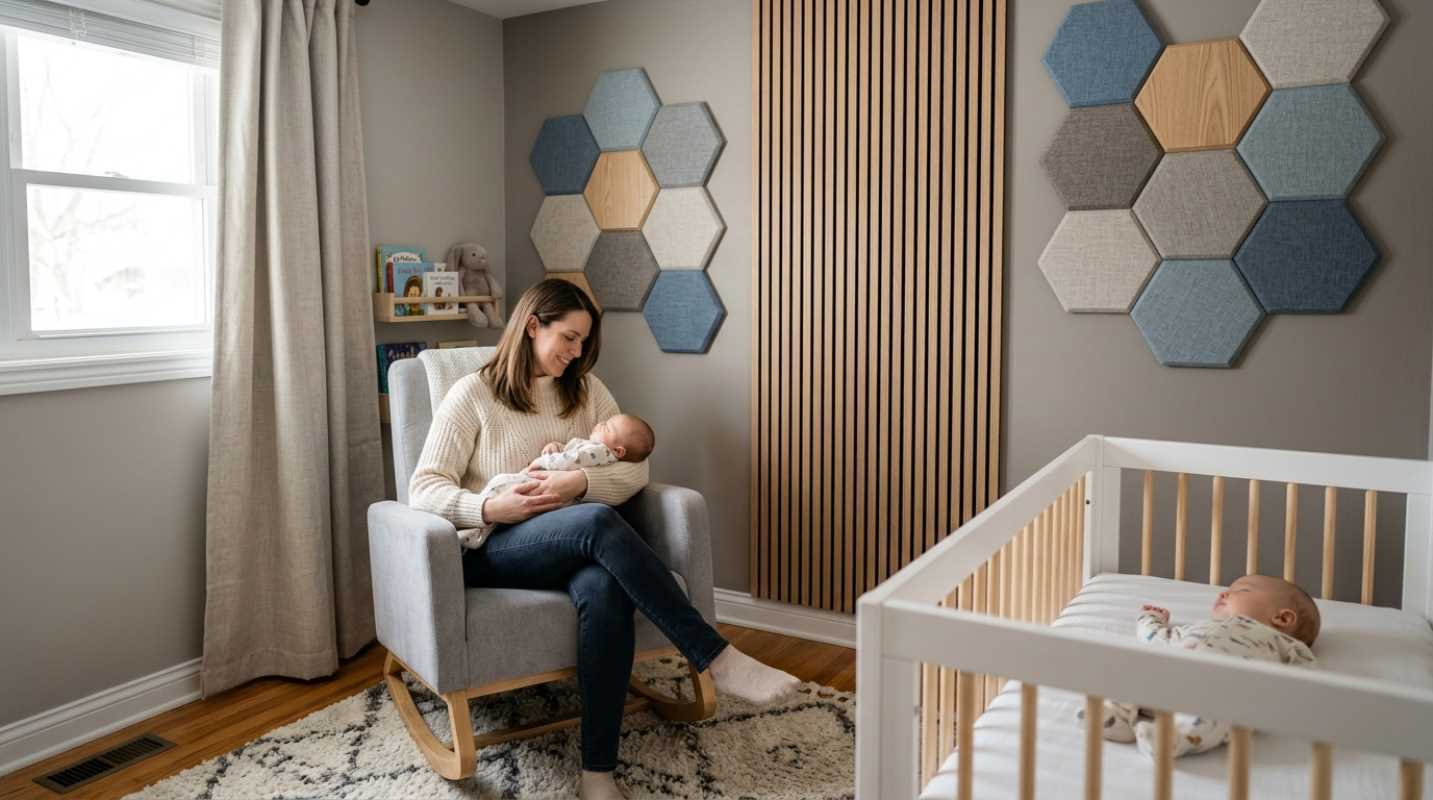
When soundproofing a nursery, material safety is just as important as noise control. Cheap polyurethane acoustic foam often off-gasses volatile organic compounds (VOCs) and poses a potential fire hazard. Stick to child-safe materials with UL GREENGUARD Gold certifications. Natural cork tiles, recycled PET felt panels, and compressed wool batts offer high acoustic absorption without releasing harmful chemicals into your baby's room.³
Optimizing Room Layout for Acoustic Comfort
You do not always have to spend hundreds of dollars on specialized construction gear to make a room quieter. Changing your layout and using everyday furnishings can drastically improve acoustics.
Furniture and soft goods naturally absorb sound waves and cut down harsh room echoes.
• Bookshelves: Place a thick bookshelf packed with books against a shared interior wall. The dense paper adds mass, while the varied surfaces scatter incoming sound waves.
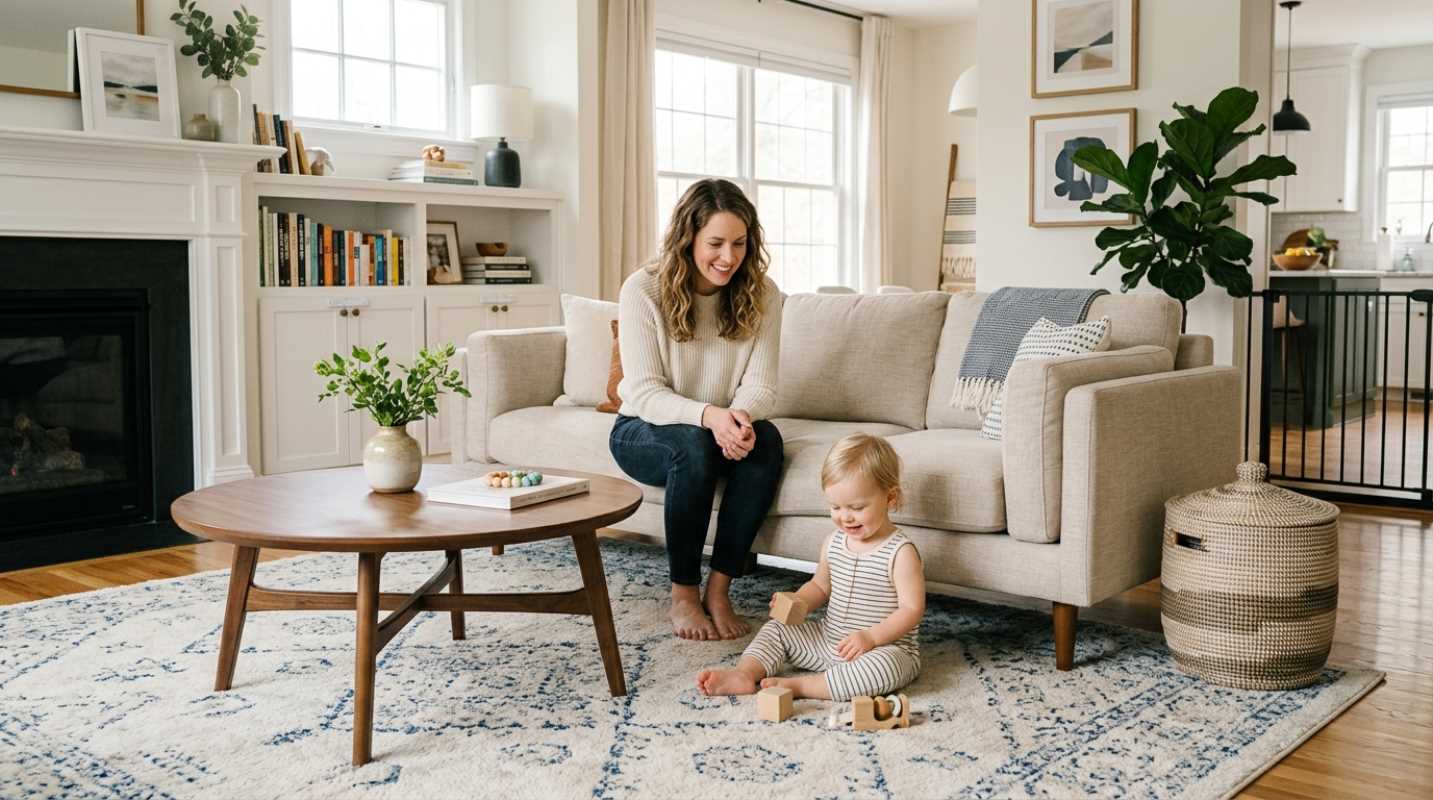
• Plush rugs: Hardwood and laminate floors bounce sound around like a ping-pong ball. Lay down a thick plush rug paired with a dense rubber or cork rug pad underneath. This deadens footsteps when you try to sneak out of the nursery quietly.
• Strategic furniture placement: Position your office desk away from thin interior partition walls. In a nursery, place the crib as far as possible from street-facing windows and noisy hallway doors.
Advanced Solutions for High-Noise Environments
What if you live near a busy highway, construction site, or noisy neighborhood? Basic air sealing might not cut it. You need heavier barriers to restore peace.
Solid-Core Doors
Most standard interior doors are hollow shells filled with cardboard honeycombs. They carry an STC rating of only 20 to 22. Swapping a hollow door for a solid wood or solid composite door immediately bumps your noise barrier to STC 35. When paired with tight weatherstripping and a drop-down door sweep, a solid-core door blocks the vast majority of household noise.
Acrylic Window Inserts
Replacing double-pane windows with specialized acoustic windows can cost thousands. An easier DIY alternative is installing custom acrylic window inserts. You mount a 1/4-inch or 3/8-inch sheet of clear acrylic inside your existing window frame using magnetic tape. This creates a tight dead-air gap between the original glass and the acrylic sheet, reducing outside street traffic noise by up to 15 decibels.
Drywall Renovations
If noise leaks directly through shared walls, consider a simple drywall renovation. You can add dense mineral wool insulation inside the wall studs, then apply a second layer of 5/8-inch drywall over the original wall using Green Glue damping compound. This sandwich layer absorbs vibrations before they enter your home office.
Enjoying Your Peaceful Sanctuary
Investing time into soundproofing pays off every single day. Whether you are trying to stay focused on an important client call or helping your infant establish a healthy sleep schedule, control over your acoustic environment changes everything.
You do not need to tackle every project at once. Start small by sealing air gaps around your doors and adding a thick rug over a quality pad. Test the room, see how much quieter it feels, and scale up to acrylic window inserts or solid doors if you still need extra silence.
With a few thoughtful tweaks, you can transform any noisy room into a calm, focused sanctuary.
Sources:
1. Understanding STC Ratings
https://www.soundproofingcompany.com/soundproofing_101/understanding-stc-and-stc-ratings
2. Best Cheap Soundproofing Materials
https://acousticalsolutions.com/best-cheap-soundproofing-materials
3. Eco-Friendly Soundproofing Materials
http://soundproofdirect.com/eco-friendly-soundproofing-materials/